Green Gables
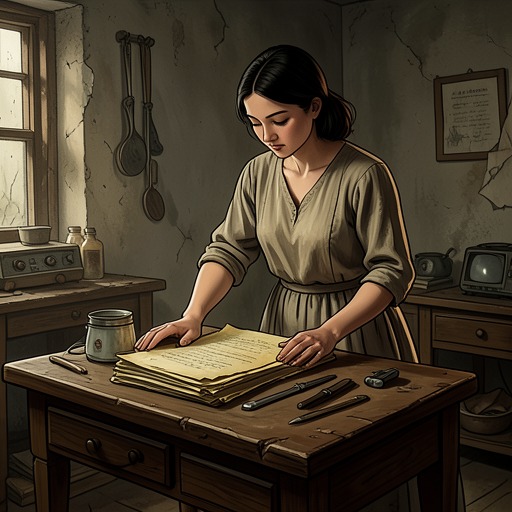
Anne of the IslandGreen Gables is both a lived-in home and the emotional center of Anne Shirley’s attachment to Avonlea. Its rooms and surrounding landmarks gather the memories of childhood, while each departure and return reveals what distance can alter—and what home still holds. The orchard, spare room, kitchen, porch, and lane become measures of change, but the welcome waiting there gives the place its enduring meaning.
Setting and Surrounding Landscape
Green Gables is introduced through the orchard, where Anne Shirley and Diana Barry rest after picking apples. The season has turned: the fields are shorn, the sea sounds hollow in the distance, and asters fill the brook valley below the house. Beyond lies the Haunted Wood; nearby are the Lake of Shining Waters and other places made dear through years of memory. The landscape is not a neutral backdrop. Its autumnal stillness lends the scene a sense that summer, like childhood, has passed into another phase.
The grounds also hold landmarks that make the home particular to Anne. She recalls the brook in the hollow, Dryad's Bubble, the Haunted Wood, and Lover's Lane as places where the memories of earlier years remain. On another homecoming she walks from Carmody through Violet-Vale, gathering Mayflowers and violets before reaching the house. These routes and natural features connect Green Gables to a wider landscape, but the emotional direction of each journey is toward home.
Rooms, Objects, and Childhood Memory
The spare room carries the force of an almost sacred childhood memory. When Rachel Lynde is due to move in, Anne and Marilla Cuthbert clear it out. Anne remembers being awed by the room: she tiptoed through it as though it were a church, feared the stern portraits of George Whitefield and the Duke of Wellington, and treated its undistorted mirror as a rare marvel. The room’s stripping and cleaning mark a small domestic rearrangement, yet Anne experiences it as the loss of an old shrine. Her laugh at the change carries regret as well as amusement: growing up means seeing a once-forbidden room emptied of its old mystery.
Other features of the house preserve a more intimate record. Anne remembers the little white porch room as a sanctuary of girlhood dreams and the Snow Queen at the window as part of the view she associates with home. Later, the Snow Queen tree has blown down in a March gale; Marilla explains that it was rotten at the core. Anne mourns its absence because the porch gable no longer feels like the same room. The tree’s fall makes change visible in a familiar frame: even a place that has seemed constant cannot preserve every object that gave it meaning.
Departures and Returns
Leaving Green Gables for Redmond turns the home into a collection of remembered places. On the gray, rainy morning of her departure, Anne thinks of the porch room, the Snow Queen, the brook, Dryad's Bubble, the Haunted Wood, and Lover's Lane. She understands that returning for holidays will not be the same as living there. Green Gables remains dear, but departure changes the terms of belonging: the home she leaves will be a refuge rather than the whole shape of daily life.
The welcome after that first absence answers the departure with a scene of deliberate warmth. Diana meets Anne at Carmody, and lights in every Green Gables window shine through the darkness as they approach. Davy Keith and another child dance around a bonfire in the yard; Davy has spent a fortnight collecting branches and is eager to show Anne how he pokes the fire. He explains that the bonfire is for her because he is glad she has come home. Even Dora Keith clings to Anne’s hand. Inside, Marilla stands in the light but prefers to greet Anne from the shadows, afraid that joy will make her cry. A loaded supper and the rose-bud tea-set complete the welcome, while Diana stays the night. Familiar affection, domestic ceremony, and the children’s noisy excitement restore the house as a place of reunion.
Green Gables also makes room for the ordinary concerns that accompany a return. In winter, Anne sits by the kitchen window after Davy Keith asks whether she and Gilbert Blythe will marry. Her thoughts turn instead to whether she can afford to return to Redmond: she will not take Marilla’s money, and she sees little chance of earning enough over the summer. From the same home that offers security, she confronts the practical uncertainty of continuing her education. The kitchen window frames both the familiar fields outside and a future she cannot yet count on.
Home as a Bond Across Change
Marilla’s attachment to Green Gables is inseparable from Anne’s arrival. Sitting by the kitchen fire before Anne is due home, Marilla remembers her earlier life and recognizes how the imaginative child brought warmth and color into it. In this recollection, the house is not merely the setting in which their relationship develops: life at Green Gables itself has been transformed by their shared years. When Anne arrives unexpectedly a day early, walking from Carmody with Mayflowers and violets, Marilla catches her in her arms and presses her and the flowers to her heart. The physical welcome breaks through Marilla’s habitual reserve.
Anne’s own language makes the distinction between visiting a place and belonging to it. Redmond has been splendid and Bolingbroke delightful, but, she says, Green Gables is home. Spring evening sounds, particularly the frogs whose song recalls the night she first arrived, bind present happiness to her earliest memories there. Later, on a wet, stormy evening, she returns again and tells the family that she is glad to see them. The familiar saying she invokes—“East, west, hame's best.”—gives voice to the same attachment: travel and experience have not displaced the value of return.
That belonging does not stop Green Gables from changing. Anne jokes that she will become an old maid because she cannot find anyone to suit her, and the loss of the Snow Queen and Diana’s absence from one homecoming make the altered world plain. At another point Anne cannot imagine bringing her cat Rusty home: Marilla detests cats, Davy Keith would tease him, and Anne expects she may not stay long. The house remains a home, but it is not an unchanged container into which every later life can simply be fitted.
Narrative Significance
Green Gables gives the story a stable point of comparison as Anne’s life expands beyond Avonlea. Its rooms and landmarks acquire meaning through use and recollection; their significance comes not from remaining untouched but from being revisited with a changed understanding. The cleared spare room, the absent tree, the remembered porch, and the returning traveler each show time working upon a place that still feels like home.
The house’s importance is clearest in the contrast between departure and welcome. Leaving makes Anne aware that holidays cannot reproduce her former life there; returning shows that affection can survive distance and altered circumstances. Green Gables is therefore both a physical home and a measure of belonging: a place where old ties remain palpable even as Anne’s education, relationships, and prospects carry her elsewhere.